


Sleep Schedule by Age: Naps, Night Sleep & Night Waking
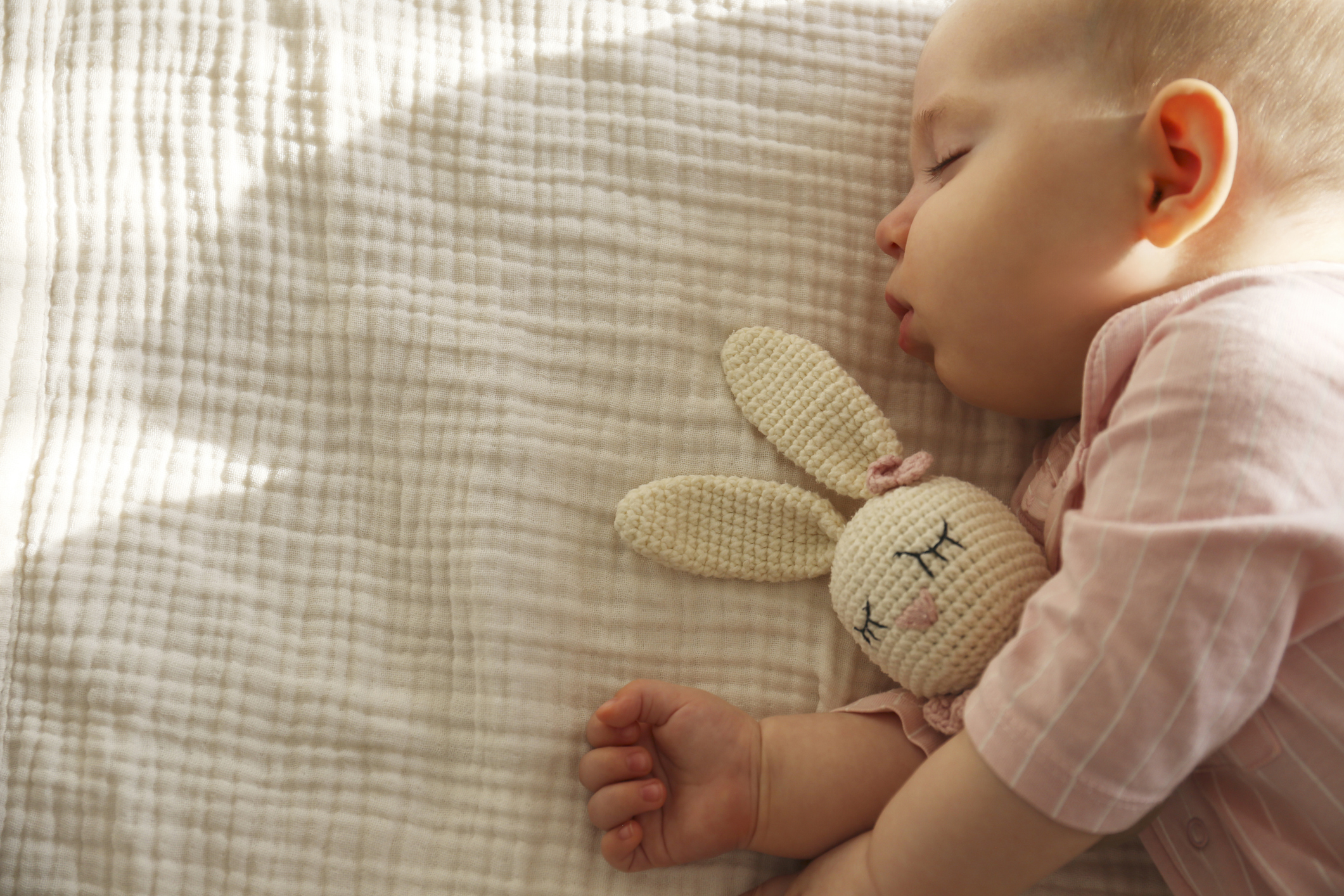
Sleep can change a lot between the baby years and preschool. Some children still need a solid afternoon nap at age 4, while others are ready to give it up much earlier. And even a child who usually sleeps well may suddenly start waking at night.
The good news is that there is no single “perfect” sleep schedule. What matters most is getting enough total sleep, having a reasonably predictable routine, and paying attention to your child’s individual needs.
How Much Sleep Do Children Need by Age?
The American Academy of Sleep Medicine and American Academy of Pediatrics recommend these amounts of sleep over a full 24-hour period, including naps.
| Age | Total sleep in 24 hours |
| 4–12 months | 12–16 hours |
| 1–2 years | 11–14 hours |
| 3–5 years | 10–13 hours |
| 6–12 years | 9–12 hours |
| 13–18 years | 8–10 hours |
These are total sleep amounts for the entire day and night, so naps are included. Your child can get that sleep in different ways depending on their age and individual needs. For example, a toddler might get some of their sleep from an afternoon nap and the rest overnight, while a preschooler may get all of it at night.
The important thing is the total amount across 24 hours, rather than making sure your child sleeps for a specific number of hours at a particular time of day. These are ranges, not targets that every child needs to hit every day. Two children the same age can have different sleep needs and still both be getting enough.
Nap Schedule by Age: How Naps Change as Children Grow
Babies commonly need two or more naps during the day. As they become toddlers, many settle into one longer afternoon nap.
By the preschool years, daytime sleep usually starts to fade. Some 3-year-olds still clearly need a nap, while many 4- and 5-year-olds no longer sleep during the day. A child who does not nap may simply get their sleep at night instead.
There is also no need to follow an exact “wake window” from a chart. These time ranges can be useful as a rough guide, especially with babies, but children do not all become sleepy at exactly the same time.
Instead, look at your child.
Signs that your child may need a nap include
- becoming unusually irritable
- rubbing their eyes
- slowing down during play
- becoming clingy
- falling asleep easily in the car or elsewhere
If your child regularly struggles to fall asleep at bedtime after a long afternoon nap, the nap may be too late or too long.
The goal is not to make the clock decide when your child sleeps. It is to find a rhythm that works for your child and your family.
Can a Nap Cause Night Waking?
Sometimes.
A long or late afternoon nap can reduce how sleepy a child feels at bedtime. This can lead to a later bedtime, difficulty falling asleep, or more waking during the night.
But cutting naps is not always the answer. A child who is overtired can also have a harder time settling and staying asleep.
If your child is waking frequently at night, look at the whole day rather than focusing only on the nap.
- Is bedtime very late?
- Is the afternoon nap particularly long?
- Is your child getting enough activity and interaction during the day?
- Are there signs that they are simply going through a temporary developmental phase?
Small adjustments are often more useful than suddenly removing a nap altogether.
Night Waking is Normal
Everyone wakes briefly during the night. Children do too.
The important difference is what happens after that brief waking. Some children turn over and go back to sleep without anyone noticing. Others fully wake up and call for a parent.
Night waking can become more noticeable during periods of change. Toddlers and preschoolers may wake because they are going through separation anxiety, developing new fears, having nightmares, or adjusting to changes at home or preschool.
Illness, discomfort, an unfamiliar sleeping environment, an irregular schedule, and being overtired can also interfere with sleep.
Some children also experience sleep behaviors such as sleep talking, sleepwalking, or night terrors. These can look dramatic but do not necessarily mean that a child is fully awake or aware of what is happening.
What can Help with Night Waking?
Keep bedtime predictable
A short, calming routine helps your child know that sleep is coming. It might be a bath, pajamas, a book, a song, and lights out, in roughly the same order each night.
Keep nighttime boring
If your child wakes up, keep the room dark and your response quiet and brief. A cuddle or reassurance is fine. The goal is simply not to turn 2 a.m. into playtime.
You can use the same short message each time, such as: “You are safe. It is nighttime. Let’s go back to sleep.”
Look at the nap
If your child is regularly taking a long nap late in the afternoon and then struggling at bedtime, try moving the nap earlier or gradually shortening it.
On the other hand, if your child becomes extremely tired and dysregulated without a nap, they may not be ready to give it up.
Give screens a break before bed
Phones, tablets, and other screens can make it harder for children to settle down, particularly when the content is exciting or stimulating. Keeping the last part of the evening screen-free can make bedtime calmer.
Make the bedroom comfortable
A dark, comfortable room with a reasonably cool and consistent temperature can help. If your child is afraid of the dark, a small nightlight may be reassuring.
Think about hunger
If your child regularly goes to bed hungry, a simple snack before brushing teeth may help. It does not need to be sugary or heavy. Something like a small, filling snack can be enough.
Help with nighttime fears
Fear of the dark, monsters, being alone, or separation from a parent can become very real during the toddler and preschool years.
Rather than dismissing the fear, acknowledge it briefly and offer reassurance. A nightlight or a comfort object can help your child feel secure without turning bedtime into a long conversation.
When Should you Talk to a Doctor?
Occasional night waking is usually part of childhood. But some sleep problems deserve a closer look.
Talk to your child’s pediatrician if your child regularly snores loudly, has pauses or difficulty breathing during sleep, seems to struggle with sleep despite having enough opportunity to sleep, or is unusually sleepy during the day.
Persistent problems falling or staying asleep can also be worth discussing, particularly when they are affecting your child’s daytime mood and behavior.
How to Know if Your Child Is Getting Enough Sleep
There is a lot of pressure around children’s sleep, especially when parents see schedules promising that a child should nap at exactly a certain time or sleep through the entire night.
Real children are less predictable than sleep charts.
A better approach is to think about the whole picture: How much is my child sleeping across 24 hours? Do they seem rested during the day? Is our routine reasonably consistent? And is something changing that might be affecting their sleep?
Sleep needs change as children grow. A nap that was essential six months ago may suddenly become unnecessary, and a child who usually sleeps through the night may go through a period of waking again.
That does not necessarily mean anything is wrong. Sometimes, it is simply another stage of growing up.


Frequently Asked Questions
How much sleep does a toddler need in 24 hours?
Children ages 1–2 generally need 11–14 hours of sleep in 24 hours, including naps. The total may be split between nighttime sleep and one daytime nap. AASM
When do children stop taking naps?
There is no single age. Many children begin dropping naps during the preschool years, while others still need one at age 4 or even 5. Look at your child’s mood, bedtime, and total sleep rather than the clock alone.
Can a late nap cause night waking?
Sometimes. A long or late nap can reduce sleepiness at bedtime, but removing naps too early can also leave children overtired. Small changes to timing or nap length are usually better than stopping naps suddenly.
Why does my toddler keep waking at night?
Night waking can happen because of developmental changes, fears, separation anxiety, illness, discomfort, schedule changes, or being overtired. A predictable bedtime routine and calm nighttime response can help. Regular routines are also recommended by the AAP.
Related Post

Tooth Brushing for Preschoolers: Simple Routines That Work
Potty Training Regression: Why It Happens and How to Help

Risky Play for Kids: Why Safe Risk-Taking Matters

Co-Regulation Before Self-Regulation: How to Help Kids Manage Big Emotions

How Art Helps Children Manage Big Feelings and Build Emotional Skills

The Worry Jar: A Simple Technique for Kids Who Worry

Simple Yoga Poses for Toddlers

15+ Mindfulness Games for Little Kids That Calm Big Feelings

Understanding Separation Anxiety in Children

A 7-Day Kindness Challenge for Young Children

Fostering Gratitude in Toddlers and Preschoolers

Seeing Your Child Through Your Eyes: Why Parental Beliefs Matter

How Much Sleep Does Your Child Really Need?

Building Confidence in Shy Children

Emotional Regulation Activities for Young Children: Simple Tips Parents Can Use

How Everyday Moments Can Grow Empathetic Kids- Bruised Heads and Big Hearts

Social Skills Needed for Kindergarten Success: What Really Matters Most

Teaching Children About Kindness

Getting Ready for Kindergarten: Everyday Skills That Build Confidence and Independence

Surviving the Terrible Twos: Understanding and Managing Toddler Tantrums

Encouraging Independence in Young Children

How to Support Your Child’s Mental Health

Fear in Little Kids: What’s Normal and How to Help

What to Do When Your Young Child Has School Anxiety

How to Help Your High-Energy Child Slow Down and Find Calm

More Than Letters and Numbers: The Emotional Side of the Summer Slide

Let’s Talk About Inchstones: The Tiny Triumphs That Matter

Empowering Your Child’s Emotion Regulation Skills: Help Them Calm Down Without Screens


