


How Art Helps Children Manage Big Feelings and Build Emotional Skills
Your four-year-old is crying but can’t explain why. Your six-year-old melts down after school but says “nothing happened.”
Young children feel emotions intensely, but they often don’t yet have the language or self-awareness to talk through what’s happening inside them. That can be frustrating for both kids and parents.
And while our instinct is often to talk things through, emotional regulation doesn’t always happen through conversation. Sometimes it happens through making something with their hands.
Art can help because it gives children an absorbing, calming activity that gently pulls their attention away from distress and into the process of creating.
How Art Supports Emotional Regulation in Children
When we say “art,” we mean anything hands-on and open-ended: scribbling with crayons, finger painting, playing with clay, tearing up magazines and gluing the pieces into a collage, shaping something out of papier-mâché.
The point isn’t a pretty end result. It’s the process of making something freely, without rules or expectations.
What the Research says
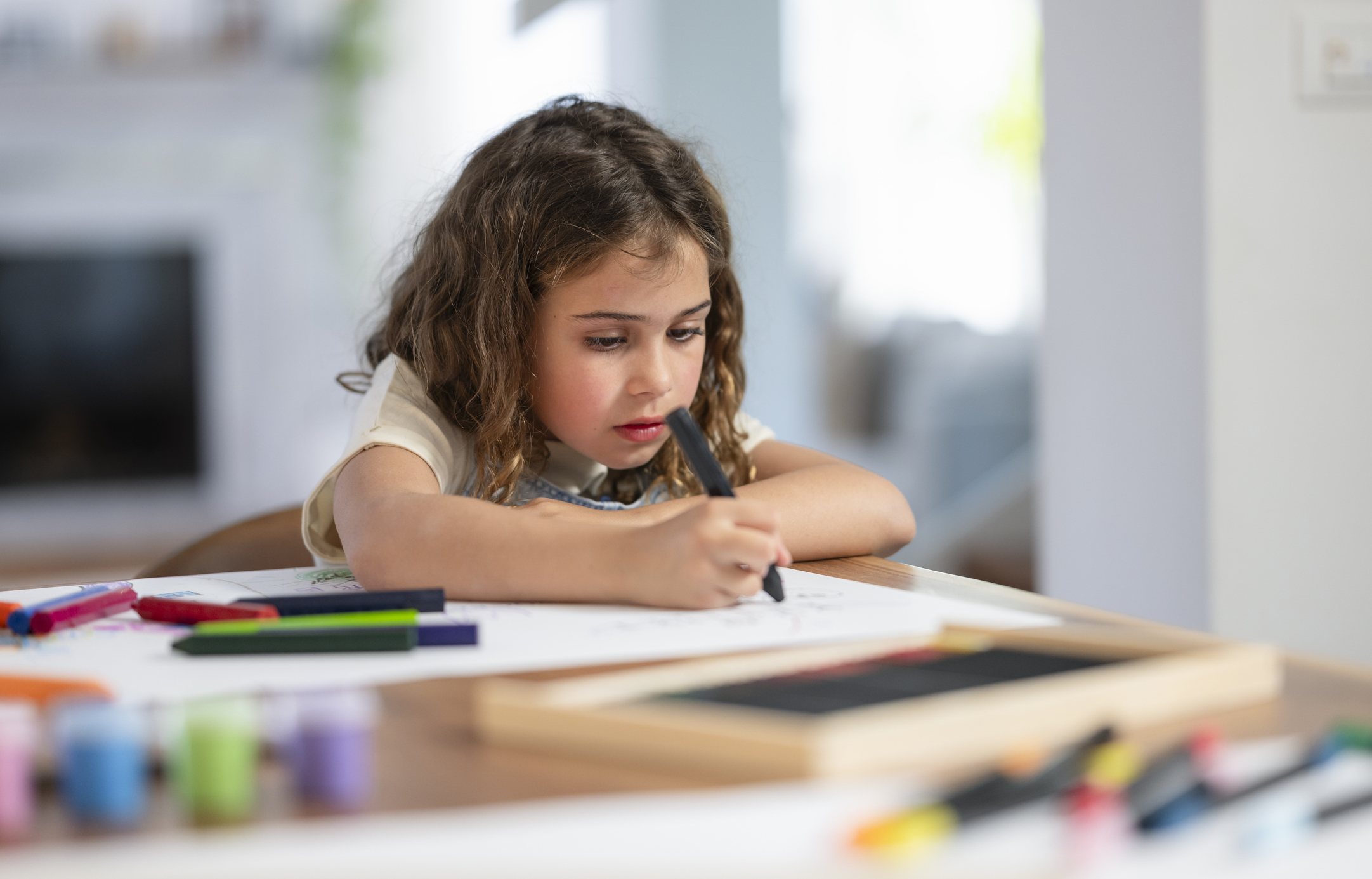
Most people assume art helps children emotionally because it allows them to express difficult feelings directly. Psychologist Jennifer E. Drake at Brooklyn College has spent years studying how drawing affects children’s emotional lives, and her research suggests something different. Drawing seems to help most when it works as a healthy form of distraction.
When kids are upset, drawing works best not because it helps them “get their feelings out,” but because it pulls their attention away from those feelings. When a child sits down and freely draws something, a dragon, a house, a made-up creature, their mind becomes absorbed in the act of creating, and that absorption interrupts the loop of negative thoughts.
In her studies, children who drew something unrelated to what was upsetting them felt significantly better afterward than children who were asked to draw about their difficult feelings directly. In other words, distraction through creative activity was more effective than emotional processing through drawing.
There’s also a longer-term benefit worth mentioning. Children who engage regularly in creative activities over time don’t just feel better in the moment. They show measurably lower levels of cortisol, which is the hormone our bodies produce under stress. Regular creative time is one of the ways to support children’s well-being over the long run.
One more finding: the mood boost only appeared when children were freely creating something of their own. When they were asked to copy someone else’s drawing instead, the effect disappeared entirely. Free expression is the key ingredient, not just keeping the hands busy.
What this Looks like at Home
You don’t need to set up an art studio. A few things that work well:
- Keep basic supplies somewhere easy to reach for your child: paper, crayons, playdough, safety scissors, old magazines for collaging.
- When your child is visibly upset or overstimulated, invite them to make something.
- Don’t guide the outcome. “Draw whatever you want” is the whole instruction they need.
- Sit nearby if they want company, but let them lead.
- If they want to tell you about what they made, listen with interest. But there’s no need to ask them to explain their drawing, their process, or how they’re feeling.
Why this Matters over Time
Learning to manage big feelings is one of the most important things a child does in their early years. Emotional regulation shapes how children handle stress, relationships, frustration, and challenges throughout the rest of their lives. The tools children build early don’t just help them get through childhood. They become part of how they cope, recover, and function in adolescence and adulthood too.
But these skills don’t develop all at once, and they don’t always develop through conversation. Sometimes they grow quietly, at a table covered in paint, while a child makes something that didn’t exist before.
That’s emotional development in action.

Frequently Asked Questions
Does a child need to draw about their feelings for art to help them calm down?
No , research referenced in the article found that children who drew something unrelated to what was upsetting them felt better afterward than children asked to draw their difficult feelings directly. The calming effect comes from the absorbing act of creating, not from processing the emotion on paper.
What kind of art activities count as helpful for emotional development?
Any open-ended, hands-on activity works: scribbling with crayons, finger painting, playing with clay, collaging with magazine clippings, or shaping papier-mâché. The common thread is freedom , there's no "right" outcome, only the process of making something.
Is there a long-term benefit to regular creative activity, or is it just a short-term mood boost?
Both in the moment, art interrupts a child's stress response, but children who create regularly over time also show measurably lower cortisol levels, suggesting ongoing creative play supports stress resilience well beyond a single calming session.
Should parents ask their child to explain what they drew or how they're feeling?
Not necessarily. The most supportive approach is to let the child lead — sit nearby, offer simple materials, and listen with interest if they choose to share, but there's no need to prompt them to explain their process or name their emotions while they create.
Related Post
Attention-Seeking Behavior in Children: What They’re Really Telling You
Sleep Schedule by Age: Naps, Night Sleep & Night Waking
Tooth Brushing for Preschoolers: Simple Routines That Work
Potty Training Regression: Why It Happens and How to Help

Risky Play for Kids: Why Safe Risk-Taking Matters
Co-Regulation Before Self-Regulation: How to Help Kids Manage Big Emotions

The Worry Jar: A Simple Technique for Kids Who Worry
Simple Yoga Poses for Toddlers
15+ Mindfulness Games for Little Kids That Calm Big Feelings
Understanding Separation Anxiety in Children

A 7-Day Kindness Challenge for Young Children

Fostering Gratitude in Toddlers and Preschoolers
Seeing Your Child Through Your Eyes: Why Parental Beliefs Matter
How Much Sleep Does Your Child Really Need?
Building Confidence in Shy Children

Emotional Regulation Activities for Young Children: Simple Tips Parents Can Use
How Everyday Moments Can Grow Empathetic Kids- Bruised Heads and Big Hearts
Social Skills Needed for Kindergarten Success: What Really Matters Most
Teaching Children About Kindness
Getting Ready for Kindergarten: Everyday Skills That Build Confidence and Independence

Surviving the Terrible Twos: Understanding and Managing Toddler Tantrums

Encouraging Independence in Young Children
How to Support Your Child’s Mental Health
Fear in Little Kids: What’s Normal and How to Help

What to Do When Your Young Child Has School Anxiety

How to Help Your High-Energy Child Slow Down and Find Calm

More Than Letters and Numbers: The Emotional Side of the Summer Slide
Let’s Talk About Inchstones: The Tiny Triumphs That Matter

Empowering Your Child’s Emotion Regulation Skills: Help Them Calm Down Without Screens


