


STEM Activities Using Kitchen Items for Preschoolers and Kindergarteners
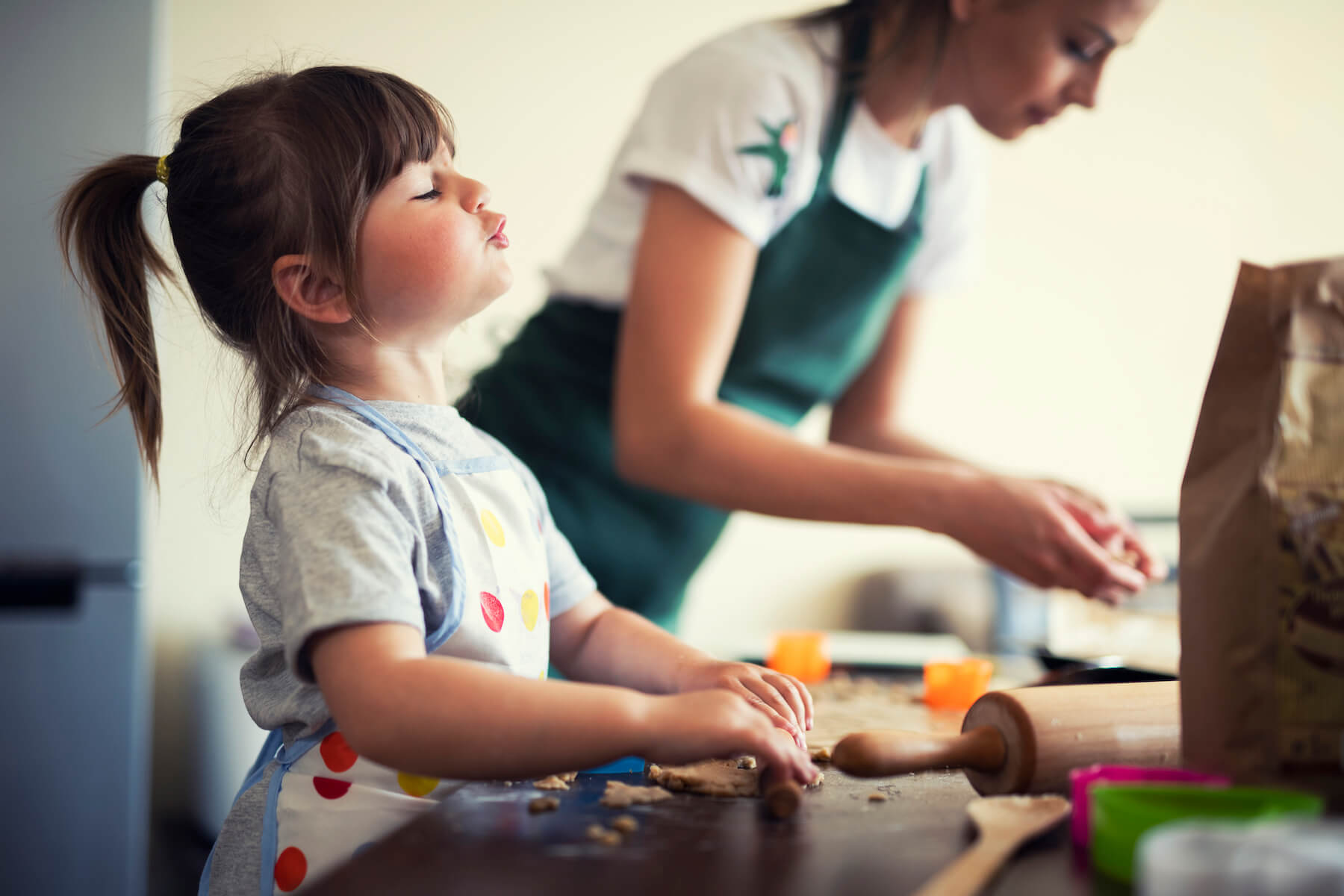
Discovering STEM doesn’t require fancy equipment. Your kitchen is already a science lab! These simple activities use everyday items you already have at home to spark curiosity and learning in your little ones.
Science Activities
1. Ice Melt Race
What you need: Ice cubes, various kitchen items (salt, sugar, warm water in a cup), plates or trays
Take ice cubes outside or place them on trays. Let your child sprinkle different substances (salt, sugar, a drop of warm water) on separate cubes and observe which melts fastest. This teaches about states of matter, temperature, and how certain materials cause ice to melt faster.
2. Sink or Float Discovery
What you need: Large bowl of water, various kitchen items (spoon, cork/bottle cap, apple slice, grape, pasta, coin)
Let your child predict whether each item will sink or float, then test their hypothesis. This introduces concepts like density and buoyancy.
3. Color Mixing with Water
What you need: Clear cups, water, food coloring (or use natural colorants like beet juice, turmeric water)
Fill cups with water and add different food colors. Let your child pour and mix to discover new colors. This teaches about color theory and encourages observation and experimentation.
4. Vegetable Observation Walk
What you need: A carrot, celery stalk, or other vegetables
Take a vegetable on your neighborhood walk. Stop periodically to observe it closely: feel the texture, smell it, break it open to see the inside. Compare it to plants you see growing in gardens or parks. This teaches basic plant biology and strengthens observation skills.
Technology Activities
5. Kitchen Tool Detective
What you need: Various kitchen tools (whisk, grater, measuring cups, colander)
Turn everyday tools into a technology exploration! Ask your child: “What problem does this tool solve?” A whisk mixes ingredients faster than a spoon, a grater makes cheese tiny, a colander separates water from pasta. This teaches how humans design tools to make tasks easier.
6. Simple Machine Scavenger Hunt
What you need: Just observation skills!
Kitchen tools use simple machines! Find levers (bottle opener, scissors), wheels (pizza cutter, can opener crank), and wedges (knife, cheese grater blades). Talk about how these tools make work easier, just like machines!
7. Shadow Clock Observations
What you need: A long wooden spoon or spatula, sidewalk chalk (optional)
On a sunny day, place a wooden spoon upright in the ground or hold it steady. Observe how its shadow changes position throughout the day. Mark the shadow’s position with chalk every hour. This simple activity introduces children to Earth’s rotation and shows how ancient civilizations used the sun to tell time.
8. Kitchen Coding Challenge
What you need: Simple ingredients or steps for a snack (like making a peanut butter and jelly sandwich)
Let your child be the “coder” and you be the “robot”! Have them give you step-by-step directions: “Get the bread,” “Spread the peanut butter,” “Add the jelly,” “Put the bread together.” Follow their instructions exactly, even if they forget a step (that’s part of the fun!). Then switch roles and let your child follow your directions. This teaches the logic behind coding and prompting.
Engineering Activities
9. Aluminum Foil Boats
What you need: Aluminum foil, tub of water, small objects (coins, buttons)
Challenge your child to fold aluminum foil into a boat that floats and holds “cargo” (coins or buttons). Let them redesign and test multiple versions. This teaches the engineering design process: plan, build, test, and improve.
10. Spaghetti and Marshmallow Structures
What you need: Dry spaghetti noodles, mini marshmallows (or playdough balls)
Build towers, bridges, or shapes by connecting spaghetti with marshmallows at the joints. Which structure is tallest? Strongest? This teaches about stability, geometric shapes, and structural strength.
11. Cardboard Tube Ramps
What you need: Paper towel tubes, tape, small balls or toy cars
Create ramps using tubes taped together at angles. Test which angle makes objects roll fastest. You can build on stairs, against furniture, or outdoors against a tree or fence. This teaches about inclines, gravity, and motion.
12. Colander Rain Catcher
What you need: Colander, bowl, cups of various sizes
On a rainy day (or use a hose), explore drainage by pouring water through the colander into bowls. Can your child engineer a way to catch all the water using multiple containers? This teaches problem-solving, planning, and water management.
Mathematics Activities
13. Measuring and Pouring Station
What you need: Measuring cups and spoons, containers, water or rice or sand
Let your child pour and measure freely. Ask: “How many small cups fill the big cup?” Bring plastic cups to the sandbox for outdoor math play! This teaches volume, measurement, counting, and number relationships.
14. Pattern Making with Pasta
What you need: Different pasta shapes (penne, bowties, spirals)
Create patterns: penne, bowtie, penne, bowtie… What comes next? Start simple and increase complexity. This teaches pattern recognition, sequencing, and predictive thinking.
15. Sorting and Categorizing Kitchen Items
What you need: Mixed utensils, pasta shapes, or snack items (crackers, cereal)
Give your child a collection to sort: by size, color, shape, or type. “Find all the spoons,” “Make a group of round things.” This teaches classification, comparing attributes, and data organization.
16. Counting Steps and Comparing Distances
What you need: Just your feet!
Count steps from the kitchen to the bedroom. From the front door to the mailbox. Which is more? Perfect for outdoor walks: count steps to different landmarks! This teaches counting, comparison, and introduces measurement concepts.
Tips for Success
- Follow their curiosity: If your child gets excited about one part of an activity, go deeper rather than rushing through. If they want to try something their own way, let them experiment!
- Ask open-ended questions: Instead of “What color is this?” try “What do you notice?” or “What do you think will happen?”
- Embrace the mess: Real learning can be messy! Have towels ready and focus on exploration, not perfection.
- Embed it in routine: STEM thinking can happen during everyday moments: while cooking dinner, setting the table, or enjoying snack time.
The beauty of these activities is that they show STEM is everywhere, like in your kitchen. By exploring everyday kitchen items, you’re showing your child that science, technology, engineering, and math are part of everyday life, helping them build curiosity and a love of learning that lasts.

Related Post
15 Fun Activities to Build Gross Motor Skills

Speech Milestones in Children: Age-Wise Guide to parents

How to Build Your Child’s Self-Control
Tweezers and Tongs Activities for Little Hands

Alphabet Books Every Preschooler Should Read

Teaching Sharing and Turn-Taking to Toddlers
Simple Ways to Boost Your Child’s Working Memory

Messy Play Activities: A Detailed Parent Guide
15 Fun Preschool Learning Activities for 3-Year-Olds
Easy Sensory Bin Ideas for Toddlers

Age-Appropriate Learning Activities for Toddlers and Preschoolers
Water Play Activities for Toddlers
Sensory Activities for 2-Year-Olds: Brain-Building Through Play
Threading and Lacing Activities for Preschoolers

The Secret to Boosting Your Child’s Vocabulary: Pointing Gesture
When to Start Potty Training
How to Raise a Problem-Solver

Building Vocabulary in Toddlers Through Play: The Science-Backed Approach

50 Boredom Busters for Toddlers and Preschoolers
Best Scissor Skills Activities for Preschoolers

Rhyming Games for Preschoolers: The Secret to Reading Success
Fine Motor Activities for 3-Year-Olds: The Complete Guide to Building Strong, Skilled Hands
Playdough Activities That Build Fine Motor Skills: The Science-Backed Guide for Parents and Teachers

Understanding Your Child’s Language Development

Understanding Executive Functions: Your Child’s Cognitive Toolkit for Success

Bringing WonJo Kids into Your Classroom: A Teacher’s Guide
Sight Words for Kindergarteners: A Complete Parental Guide
25 Fun Sorting Activities for Preschoolers – Easy, Printable & Hands-On Ideas
12 Best Pattern Activities for Preschoolers That Build Math & Reading Skills

Every Child Has a Learning Superpower

The Benefits of (Quality) Interactive Learning Apps for Preschoolers
Counting Activities for 3-Year-Olds: 20 Simple & Fun Ways to Grow Early Math Skills

Best Books for 3 Year Olds: 50+ Must-Read Picks to Spark a Love of Reading

Scientific Experiments for Preschoolers: 15+ Easy Activities That Spark Curiosity and Learning
Teaching Phonics at Home: A Parent’s Guide to Building Strong Readers
2-Year-Old Milestones: What to Look For

Building Confidence and Skills for Kindergarten Readiness

Understanding Your Child’s Gross Motor Development
Beat the Summer Slide Without Breaking a Sweat
Raising Tomorrow’s STEM Leaders: The Power of Spatial Skills

How to Turn Storytime into a Learning Moment?

Embracing Your Child’s Unique Strengths and Challenges: Understanding Learner Variability


