


Simple Ways to Boost Your Child’s Working Memory
What Is Working Memory?
Working memory is a core part of your child’s executive functions. It’s their ability to hold information in mind and work with it, like a mental notepad they can write on, erase, and update. When your child remembers to get their shoes AND jacket from their room, or when they keep track of whose turn it is during a game, they’re using working memory.
This isn’t just about storage. Working memory involves actively manipulating and updating information to guide behavior. It’s what allows children to follow multi-step instructions, remember the rules while playing a game, or recall what happened earlier in a story you’re reading together and use that to predict what comes next, like remembering that the character lost their hat and guessing what might happen because of it.
Why is it important?
Working memory is critical not only for daily tasks like following instructions and playing games, but also for core academic subjects including reading, math, and science. This cognitive skill allows children to decode words while tracking meaning in a story, hold multiple steps in mind during math calculations, and connect new science concepts to information they just learned. Essentially, working memory acts as the engine that powers your child’s ability to learn, adapt their thinking as new information comes in, and actively use what they know to solve problems in the moment: skills that become increasingly important as they progress through school and life.
How Can You Support Working Memory as Your Child Grows?
The activities below are organized by age group, but every child develops at their own pace. Feel free to explore activities from younger age ranges if your child is just building these skills, or try challenges from older groups if they’re ready for more complexity. The key is to meet your child where they are and adjust the difficulty so tasks feel engaging but not frustrating
18-36 Months: Movement and Repetition
At this age, working memory develops through simple games that combine listening and doing.
- Action songs and copycat games help toddlers hold a sequence of movements in mind. Try songs like “If You’re Happy and You Know It” or “Head, Shoulders, Knees and Toes,” or play a game where you clap twice and they copy you, then stomp once and they repeat that too.
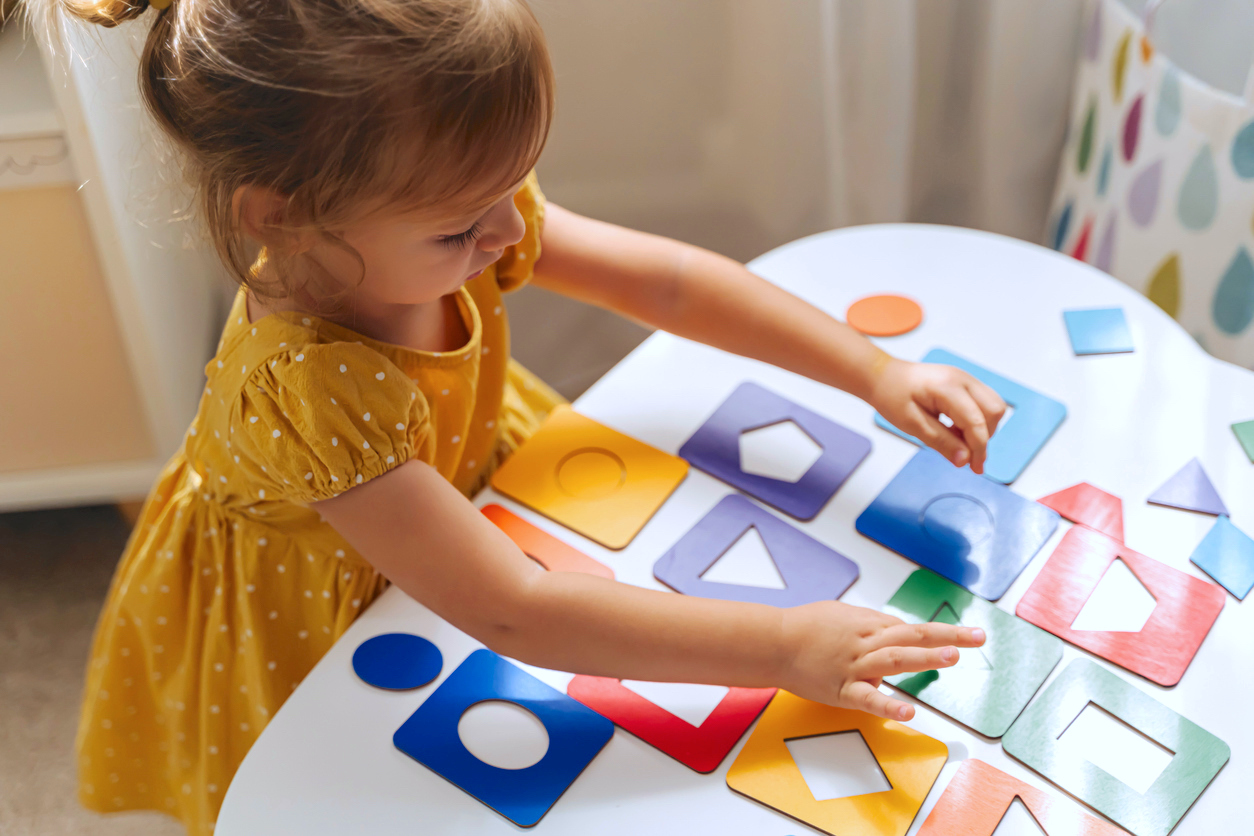
- Simple matching and sorting activities build mental organization. Give your toddler a pile of blocks and two bowls, and help them put blue blocks in one bowl and red blocks in another. Start with just two categories.
- Retelling daily events strengthens memory. At bedtime, talk through your day together: “First we went to the park, then we had lunch, then we read books.” Ask them what happened next.
- Basic puzzles require holding shapes and spaces in mind. Start with 2-4 piece puzzles where they match pictures or fit simple shapes into frames.
For more ways to build child’s skills at home, check out our simple sorting activities for toddlers page
3-5 Years: Building Sequences
Preschoolers can handle activities with multiple steps and more complex patterns.
- Cumulative songs challenge them to remember growing lists. Sing songs where each verse adds something new they need to recall, like “Old MacDonald Had a Farm” or a shorter version of “The Twelve Days of Christmas.”
- Cooking together is perfect for working memory. Have your child help make sandwiches: “First get the bread, then spread peanut butter, then add jelly.” They hold each step in mind while completing it.
- Collaborative storytelling exercises their mental tracking. You start a story, they add the next sentence, you add another. They must remember what’s already happened to make their part fit.
- Pretending to play with plans stretches working memory naturally. Before playing, ask: “What are you going to be? What will happen in your game?” Then watch them hold that plan while playing it out.
- More challenging puzzles require remembering which pieces fit where and visualizing the complete picture.
5-7 Years: Strategy and Mental Juggling
Kindergarten and early elementary kids can handle games requiring them to track multiple pieces of information and plan ahead.
- Memory card games directly target working memory. Flip two cards trying to find matches. They must remember where specific cards are located across many turns.
- Strategy board games require planning several moves ahead while remembering the rules and tracking other players’ positions. Games like “Guess Who?” and “Uno” are perfect for this.
- Rhythm and pattern games build auditory working memory. Create clapping patterns that get progressively longer: clap-clap-pause-clap becomes clap-clap-pause-clap-stomp-stomp.
- Memory chain games are excellent practice. “I’m going on a trip and I’m bringing…” where each person repeats the full list before adding their item.
- Guessing games with rules exercise logic and memory together. Think of an object and have your child ask yes/no questions to figure it out. They must remember previous answers while forming new questions.
- Call-and-response activities like “Simon Says” have your child repeat increasingly complex phrases or actions back to you, holding them in mind long enough to reproduce them accurately.

Related Post
15 Fun Activities to Build Gross Motor Skills

Speech Milestones in Children: Age-Wise Guide to parents

How to Build Your Child’s Self-Control
Tweezers and Tongs Activities for Little Hands

Alphabet Books Every Preschooler Should Read
Teaching Sharing and Turn-Taking to Toddlers

Messy Play Activities: A Detailed Parent Guide
15 Fun Preschool Learning Activities for 3-Year-Olds
Easy Sensory Bin Ideas for Toddlers
Age-Appropriate Learning Activities for Toddlers and Preschoolers
Water Play Activities for Toddlers
Sensory Activities for 2-Year-Olds: Brain-Building Through Play
Threading and Lacing Activities for Preschoolers

The Secret to Boosting Your Child’s Vocabulary: Pointing Gesture
When to Start Potty Training
How to Raise a Problem-Solver
Building Vocabulary in Toddlers Through Play: The Science-Backed Approach

50 Boredom Busters for Toddlers and Preschoolers
Best Scissor Skills Activities for Preschoolers
STEM Activities Using Kitchen Items for Preschoolers and Kindergarteners

Rhyming Games for Preschoolers: The Secret to Reading Success
Fine Motor Activities for 3-Year-Olds: The Complete Guide to Building Strong, Skilled Hands
Playdough Activities That Build Fine Motor Skills: The Science-Backed Guide for Parents and Teachers

Understanding Your Child’s Language Development

Understanding Executive Functions: Your Child’s Cognitive Toolkit for Success

Bringing WonJo Kids into Your Classroom: A Teacher’s Guide
Sight Words for Kindergarteners: A Complete Parental Guide
25 Fun Sorting Activities for Preschoolers – Easy, Printable & Hands-On Ideas
12 Best Pattern Activities for Preschoolers That Build Math & Reading Skills

Every Child Has a Learning Superpower

The Benefits of (Quality) Interactive Learning Apps for Preschoolers
Counting Activities for 3-Year-Olds: 20 Simple & Fun Ways to Grow Early Math Skills
Best Books for 3 Year Olds: 50+ Must-Read Picks to Spark a Love of Reading

Scientific Experiments for Preschoolers: 15+ Easy Activities That Spark Curiosity and Learning
Teaching Phonics at Home: A Parent’s Guide to Building Strong Readers
2-Year-Old Milestones: What to Look For

Building Confidence and Skills for Kindergarten Readiness

Understanding Your Child’s Gross Motor Development
Beat the Summer Slide Without Breaking a Sweat
Raising Tomorrow’s STEM Leaders: The Power of Spatial Skills

How to Turn Storytime into a Learning Moment?

Embracing Your Child’s Unique Strengths and Challenges: Understanding Learner Variability


