Screen Time Tips for Traveling with Toddlers and Preschoolers
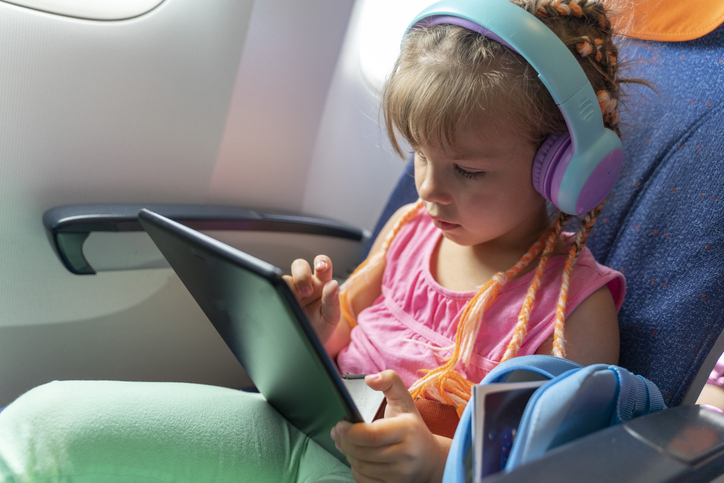
Travel days with little ones can feel overwhelming. Between the packing, the logistics, and keeping your child happy in unfamiliar spaces, it’s natural to reach for screens as a solution. And that’s okay! Screens can be genuinely helpful tools during travel. The key is using them thoughtfully to balance entertainment with your child’s physical and emotional well-being.
Before You Hand Over the Tablet
Give boredom a chance. I know it sounds counterintuitive when you’re already stressed about the trip, but try waiting before offering screens. Let your child look out the window, ask questions about the plane, or simply sit with their thoughts for a bit. Those first moments of a journey can spark curiosity and conversation, especially if it’s their first time flying or taking a train. You might be surprised by what they notice or wonder about.
The screen will still be there when you really need it, and starting without it gives you more options later.
Pack Smart: Digital and Non-Digital
Download everything ahead of time. Nothing derails a peaceful moment faster than realizing you need WiFi to access your child’s favorite show. Choose apps with offline access and download episodes, songs, and games before you leave home. Test them in airplane mode to make sure they actually work offline.
Bring the analog favorites too. Before your trip, pack non-screen activities your child already loves. If they enjoy drawing, bring crayons and paper. If they like stickers or small toys, pack those. Better yet, let your child help choose what to bring. This gives them ownership over their travel entertainment and reminds both of you that screens aren’t the only option.
Remember the classics. Think back to your own childhood car rides. Games like “I Spy,” counting games, or singing songs together don’t require any materials at all. These simple activities turn travel time into family time and can be just as engaging as any app. Need some inspiration? Check out road trip game ideas.
Headphone Guidelines
Try before you fly. If you’re traveling by plane or train, pack headphones and test them at home first. Make sure they fit comfortably and that your child knows how to use them.
For car travel, skip headphones if possible. This lets you keep an ear on what they’re watching or playing. Of course, if you need your ears to rest for a bit, that’s also completely understandable.
Stay Engaged
Get a rest. When your child finally settles down with a screen, it’s incredibly tempting to zone out completely. If you need those few minutes to decompress, take them. You deserve that break.
But join them when you can. When you have the energy, try reconnecting by watching or playing alongside them for a bit. Notice what makes them laugh, which characters they love, or how they solve problems in a game. These moments help you understand what captures their imagination and can guide future choices about content.
Build in Screen Breaks
Encourage your child to pause and enjoy a snack without the screen, take a bathroom break, or simply look around. These pauses help their eyes rest and keep them from getting too locked into screens.
Shorter content makes this easier. Choose 20-minute episodes instead of full-length films whenever possible. Shorter formats create natural stopping points where you can suggest a break without interrupting a story your child is invested in.
Follow the 20/20/20 rule. The American Optometric Association recommends this simple habit: Every 20 minutes, have your child look away from the screen at something at least 20 feet away (like out the airplane window) for 20 seconds. Also aim for a 10-minute walking break every hour when possible.
For the Journey Ahead
Travel with young children is hard work, and screens are a helpful tool in your parenting toolkit. These strategies won’t eliminate every meltdown or restless moment, but they can make the journey smoother for everyone. By balancing screen time with other activities and building in small breaks, you’re making screens work for your family in a way that supports your child’s comfort and health.
Safe travels!


Related Post
What Does Screen Time Addiction Look Like in Preschoolers?

How to Choose Safe Apps for Your Preschooler

How Much Screen Time for Kids: What Every Parent Should Know
Transform Screen Time from Passive to Active Learning

Helping Kids Develop a Healthy Relationship with Technology

Navigating Screen Time: A Guide for Parents

How to Choose the Best Educational App for Your Child?